Takes a person out
Flies out empty. They climb in. It brings them back. The fuel burned on the way out weighs about as much as the person, so it's no heavier coming home.
 Jetwing
Get in touch
Jetwing
Get in touch
01/05One-person rescue aircraft
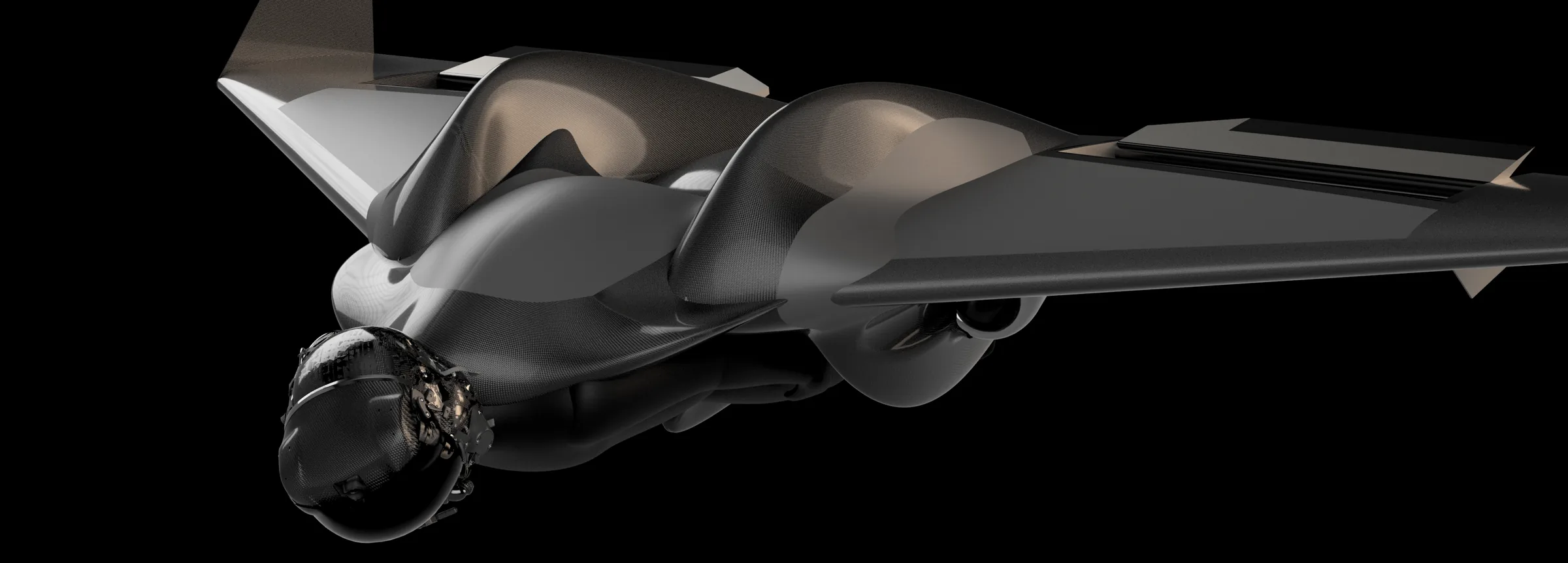
One person, to or from almost anywhere within 150 km. Ready in about a minute. Built for storms, strong wind, low cloud and night.
It works in both directions, and needs no runway at either end.
Flies out empty. They climb in. It brings them back. The fuel burned on the way out weighs about as much as the person, so it's no heavier coming home.
Carries a rescuer, medic or doctor to where they are needed, when roads, boats and helicopters can't get there.
02/05Night and extreme weather operations
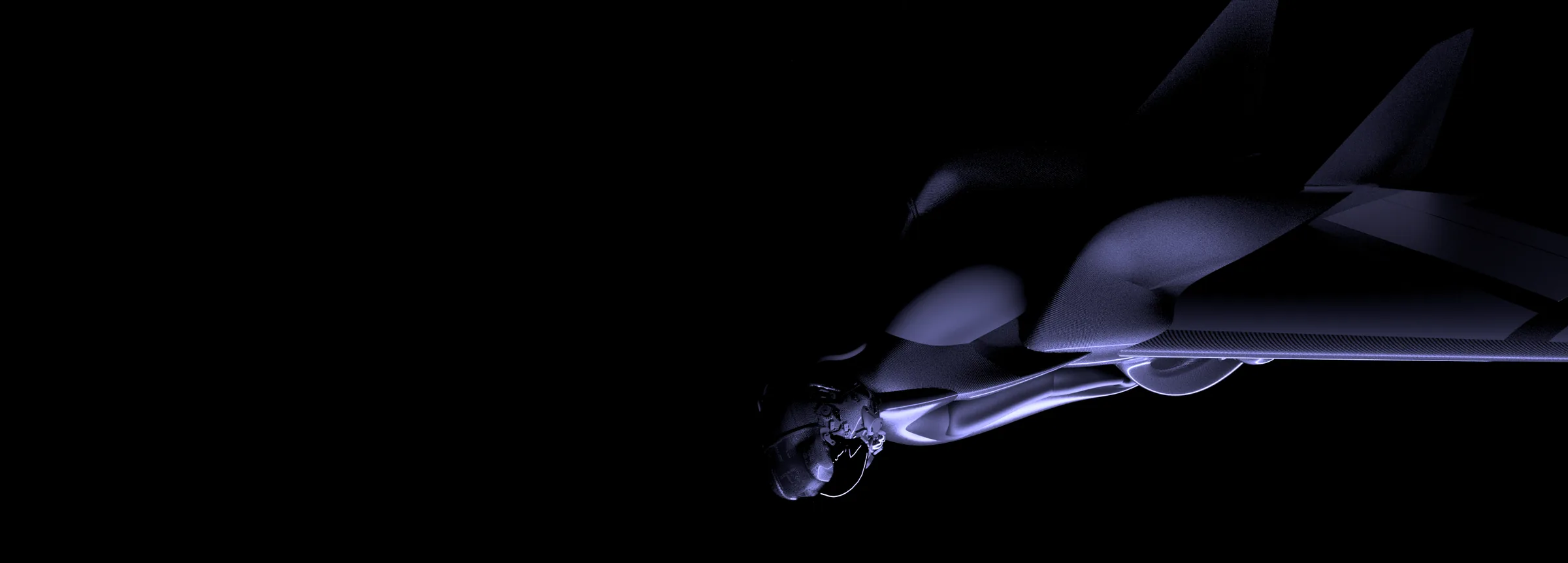
Helicopters wait for the storm to pass. The person who needs help can't.
We fly right through it.
Four conditions keep most rescue aircraft on the ground. The Jetwing is designed around each one.
Radar and lidar, matched to terrain maps, find a safe landing spot with no light at all.
Flies itself and lands without seeing the ground. No pilot to get disoriented.
A small, heavily loaded wing moving fast is pushed around less than a slow, light aircraft.
Heated edges, inlets and sensors keep ice off. A sealed shell keeps the rider warm and dry.
Full redundancy. No single failure brings it down.
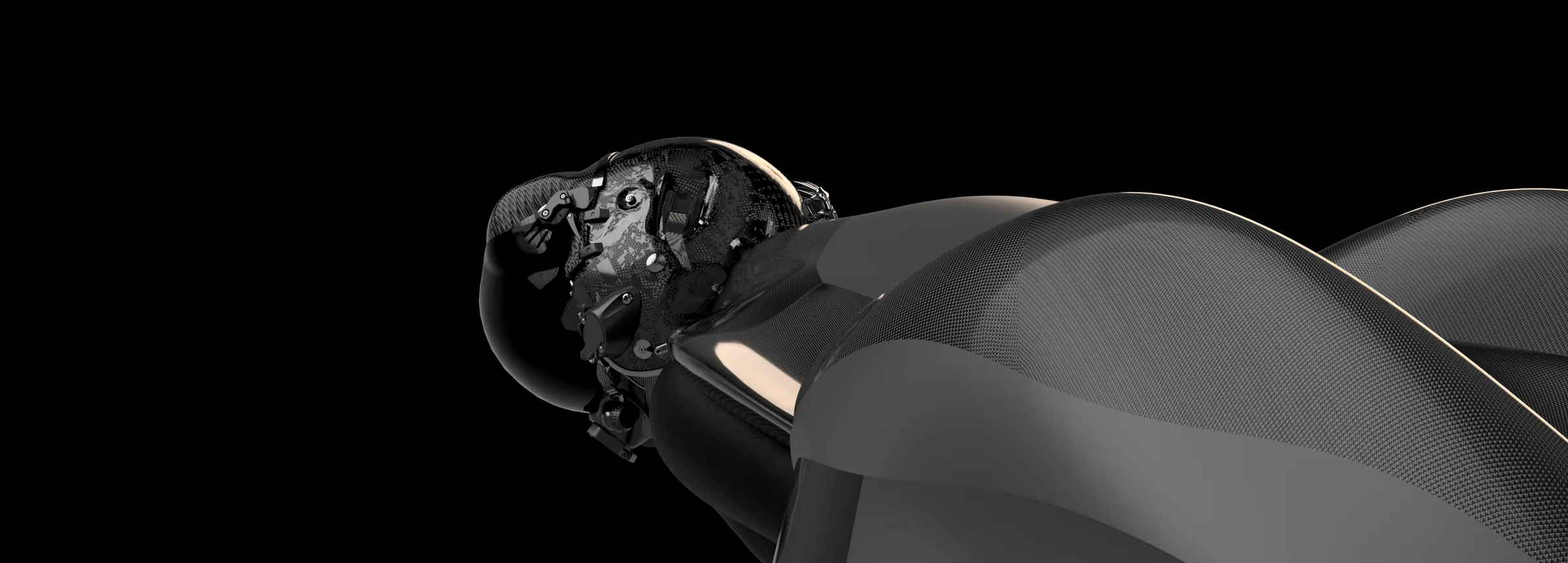
Pilot / Passenger
An untrained rider touches nothing; a trained one can steer within safe limits.
CECS (Crew Environmental Control System)
Takes the brutal conditions of flight and makes them usable, not tiring or dangerous.
HMD
Full-color helmet-mounted display with night vision. The primary link between rider and aircraft.
03/05Systems, autonomy and safety
The person inside should never have to save the aircraft. Every system is built around that.
An untrained rider touches nothing; a trained one can steer within safe limits.
Takes the brutal conditions of flight and makes them usable, not tiring or dangerous.
Full-color helmet-mounted display with night vision. The primary link between rider and aircraft.
No single failure brings it down, and the person inside never has to take over.
Computers move every control surface and engine. The aircraft can't be pushed outside its safe limits.
Launch, route, landing and return, all on its own. No pilot needed on board.
Radar, lidar and terrain maps build a picture of the ground in darkness, cloud and rain.
Takes its target straight from dispatch, reports its position the whole way, lands where it's sent.
Every critical system is doubled. No single failure brings it down.
A ballistic parachute for the whole aircraft. In hover, a separate protection system makes sure an engine failure doesn't write off the aircraft.
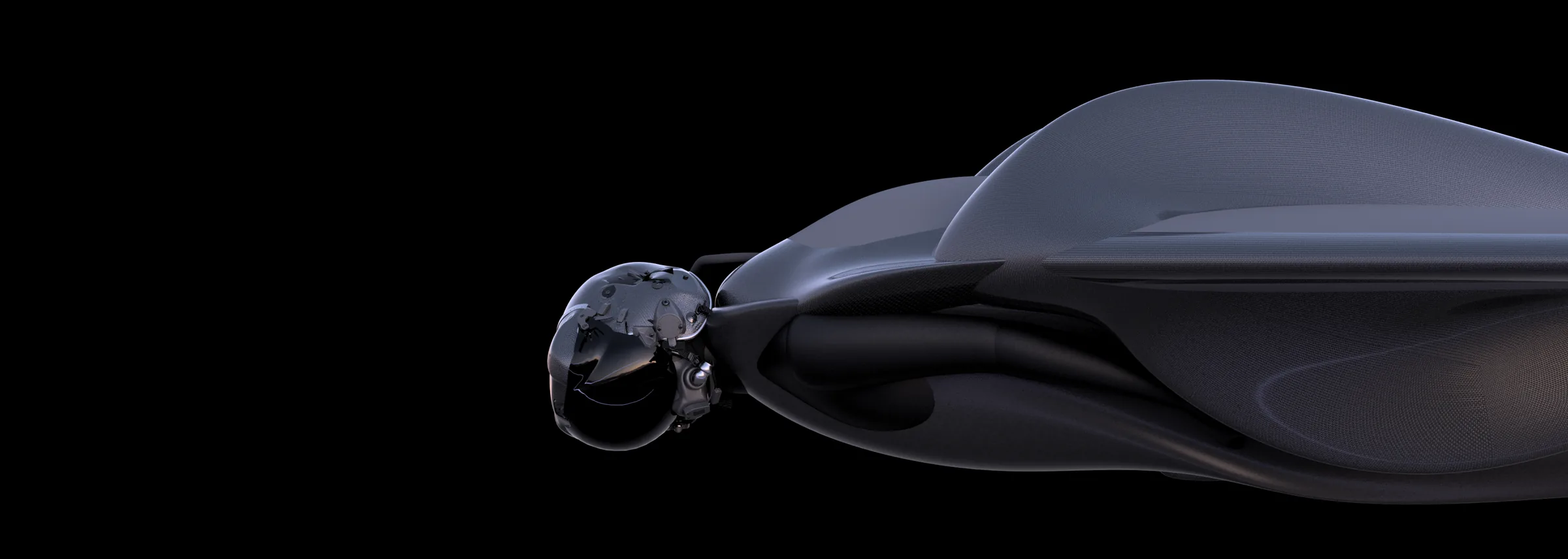
04/05Mission: pilot recovery
02:10, low cloud, no moon. A fighter pilot ejects 110 km behind the front line, where a rescue helicopter would likely be shot down.
Beacon received
02:10, low cloud, no moon. A fighter pilot ejects 110 km behind the front line, where a rescue helicopter would likely be shot down. This is how the Jetwing brings them back, with nobody else put in danger.
Beacon picked up. The rescue center sends the position.
Lifts off empty from a dispersed base. Low and fast.
Lands by the beacon in the dark. No crew on board to lose.
The pilot climbs in. Flight suit and harness already on.
Back across the line. One pilot recovered, nobody else at risk.
Anyone who has to reach one person fast, where helicopters can't safely go.
Bring downed pilots home.
Get the wounded off the front line.
In and out with no landing zone.
Reach crews in storms.
Keep working through the disaster.
05/05At a glance
A one-person aircraft that takes off and lands vertically, cruises on a wing and flies itself. It goes out empty to bring someone back, or carries a rescuer in, in conditions that ground helicopters.
Aircraft
Operations
Safety and rider
Built for
Concept study, 2026. All figures are design targets.
Talk to us about programs, partnerships and demonstrations.
[email protected]